



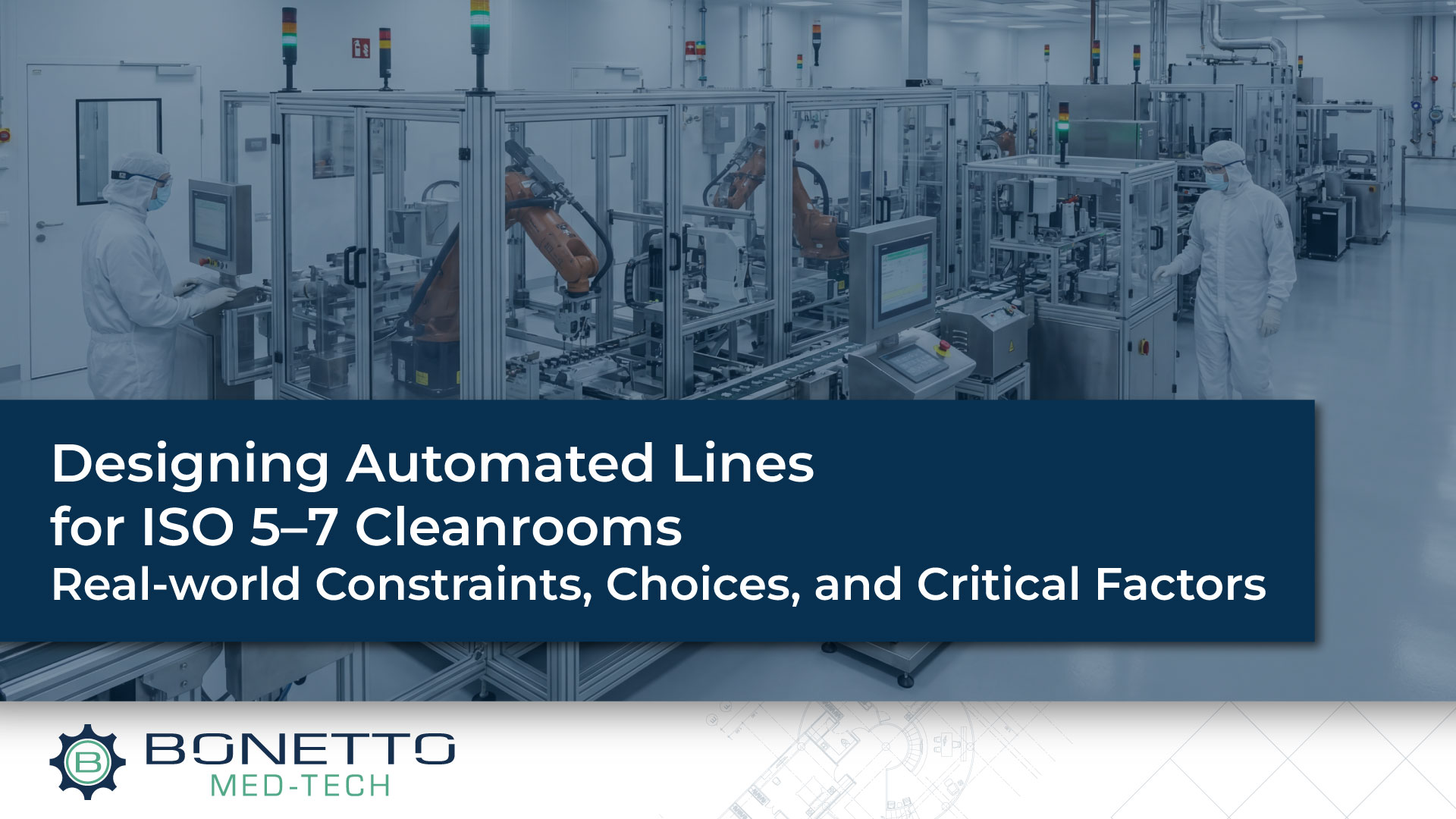
In the medical sector, designing an automated line for a cleanroom is often misinterpreted as a simple adaptation: same principles, just more attention to cleaning. In reality, it is quite the opposite. When working in contamination-controlled environments, the operating conditions completely redefine the machine.
The line does not adapt to the cleanroom; the cleanroom dictates the design.
Not All Cleanrooms Are Created Equal
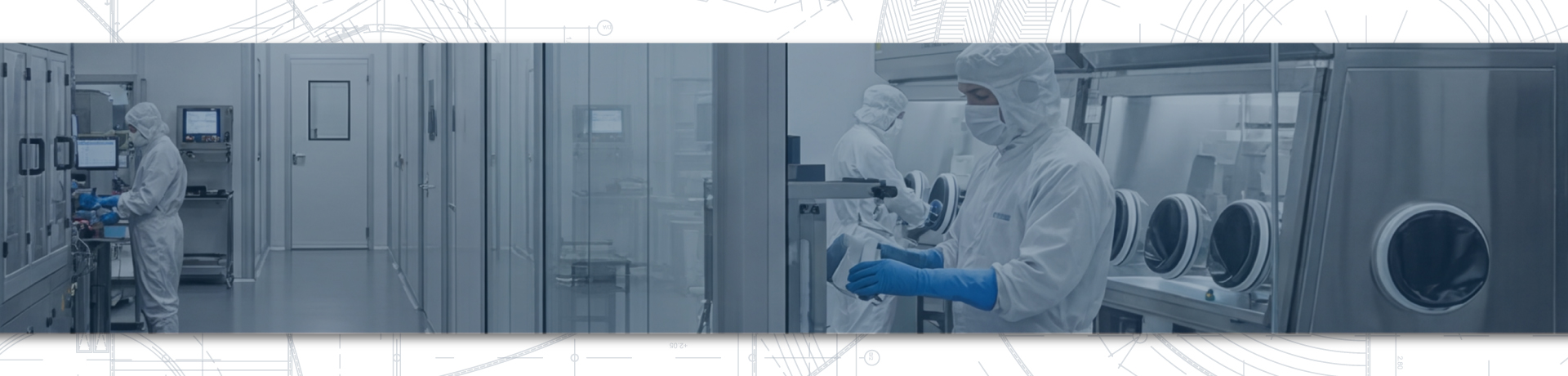
Cleanrooms, defined by the ISO 14644 standard, set strict limits on airborne particles. However, the true impact lies in how these limits influence machine architecture. Between ISO 7 and ISO 5, everything changes:
- In ISO 7, requirements can often be localized.
- In ISO 5, the entire machine falls within the critical perimeter. Designing for cleanrooms is not a matter of components; it is a comprehensive design philosophy.

The Machine is Not Neutral: It Generates Contamination
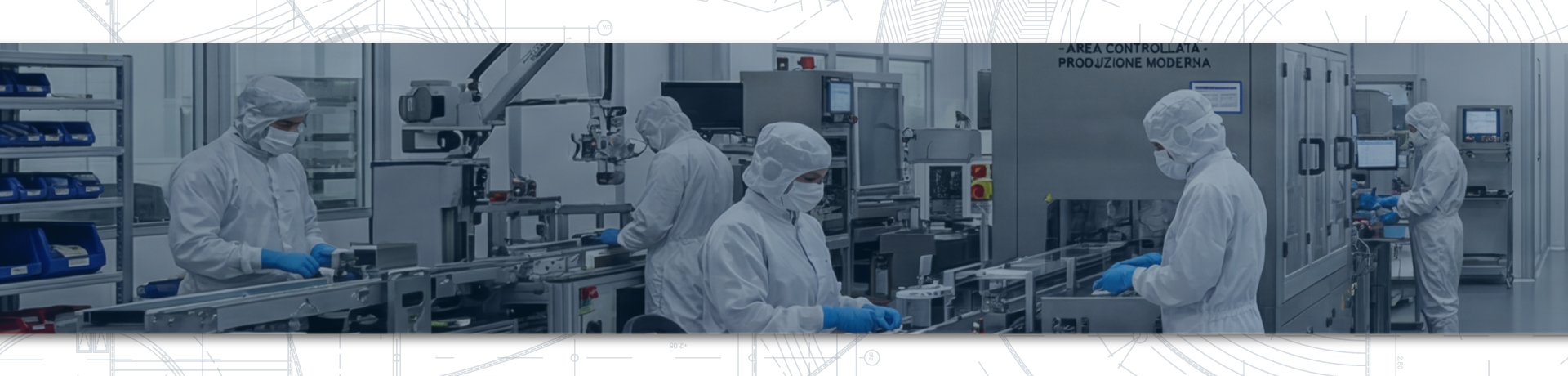
One of the most underestimated aspects is that the line itself can become an active source of contamination:
- Every point of friction generates particles.
- Every movement creates micro-dispersions.
- Every component can accumulate residues.
To mitigate this, our engineering integrates targeted solutions: low-wear systems, sealed components, non-dispersive lubrication, and ESD-safe configurations. In high-demand contexts, we intervene directly on the architecture through kinematic isolation and localized extraction in critical zones.
Surfaces, Materials, and Geometries
In controlled environments, material choice goes beyond durability. It is a lever to:
- Ensure repeated sanitization cycles.
- Prevent invisible buildup.
- Guarantee full traceability.
We utilize AISI 316L stainless steel, medical-grade certified polymers, and continuous, non-porous surfaces. The real breakthrough, however, is in the design for cleaning: eliminating dead zones, reducing interfaces, and creating geometries that facilitate maintenance.
When Airflow Drives Design
In a cleanroom, airflow is an integral part of the system. A line must respect these dynamics by avoiding interference with laminar flows, maintaining pressure gradients, and managing exhaust/compressed air outside critical areas. Layout and footprint are designed in synergy with the HVAC system from day one.
Validation and Data: The Machine as a Documented System
In the medical industry, production is not enough; you must prove how you produced. Our lines are built for:
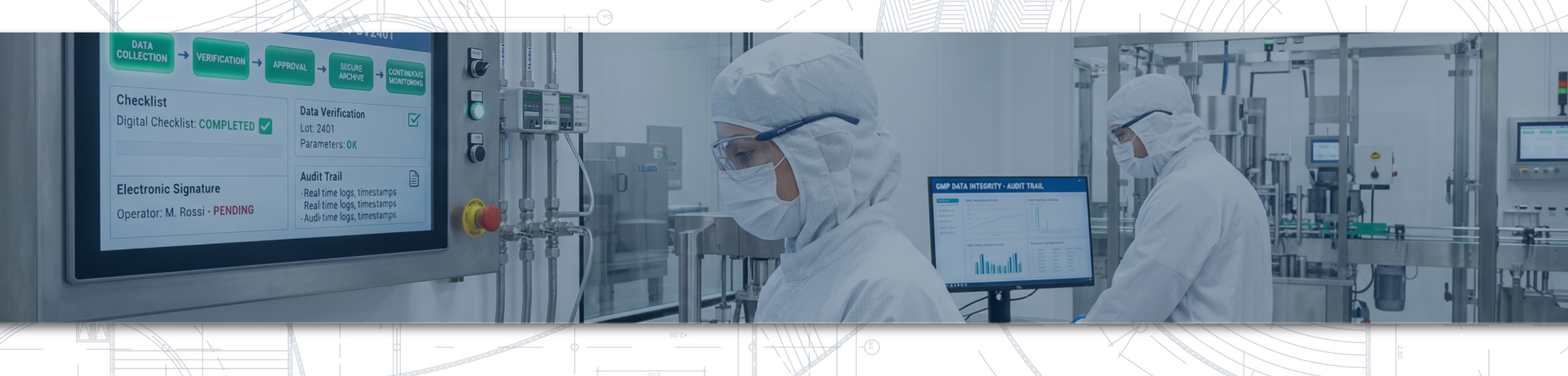
- Full process traceability and data logging.
- Integration with supervisory systems.
- Compliance with GMP and ISO 13485 through structured validation cycles (URS, DQ, IQ, OQ, PQ).
Total Integration
Complexity lies in the coherence of the whole. A line must integrate with cleanroom layouts, operational flows, access protocols, and sanitization logic. In the medical field, there are no “off-the-shelf” solutions—only projects built for a specific context.
Designing cleanroom automation is a balancing act between environment, process, and regulation. It is not an extension of industrial automation; it is a discipline of its own.
Do you have a process to integrate into an ISO 5, 6, or 7 cleanroom? At BONETTO, we develop automated lines designed from the ground up for contamination-controlled environments.

Do you have a project to develop?
Contact us
sales@bonettoautomazioni.com